
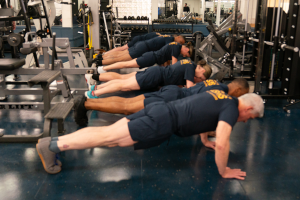
As part of PHS Mission Fit, Public Health Service officers will also benefit from:
- Clear expectations for physical fitness and consistent training
- Weekly structured exercise opportunities
- Motivational challenges to build camaraderie and engagement
- Holistic support and resources across physical, mental, nutritional, and sleep health
How Much Physical Activity Do You Need?
Adults need at least 150 minutes of moderate-intensity aerobic activity each week, plus 2 days of muscle-strengthening activity. If you step it up to vigorous-intensity aerobic activity, aim for at least 75 minutes a week to get the same benefits in half the time.
Not sure if you're doing moderate- or vigorous-intensity activity? Use the talk test:
- If you're breathing hard but can still have a conversation easily, it's moderate-intensity activity
- If you can only say a few words before you have to take a breath, it's vigorous-intensity activity
Remember, lots of things count as physical activity and it all adds up. Meeting your physical activity and fitness goals doesn't always mean a long gym session. Even on your busiest days, small amounts of activity add up. Try a walking meeting, push-ups during a TV commercial, or taking the stairs instead of the elevator. Increasing your physical activity will support both your overall health and your PFT readiness.
Explore the PHS Mission Fit Move Your Way® Fact Sheet for a full breakdown of what counts as physical activity and how to get started.
Why It Matters Right Now
Physical activity doesn't just build long-term health — it makes a difference today. Getting regular activity can:
- Reduce stress
- Boost your mood and reduce feelings of anxiety
- Sharpen your focus and cognitive performance
- Improve your sleep
Consistency matters. Whether you're at home, assigned to a detail, or deployed, try these tips to stay motivated:
- Schedule activity at the same time each day so it becomes a habit. If deployment or other duties shift your schedule, set a temporary routine and jump back into your regular rhythm when you can. Something is better than nothing!
- Find activities you actually enjoy — you're far more likely to stick with something that doesn't feel like a chore.
- Get active with others when you can. Service Workout Wednesdays are a great opportunity to be active and build camaraderie alongside your fellow officers.
- Keep a log to track your progress, so you can look back on how far you've come.
Getting Your Kids Active Too
As a parent, you play one of the biggest roles in shaping your children's relationship with physical activity. Kids and teens need 60 minutes of physical activity every day — and the good news is that being active together counts for the whole family.
Some easy ways to make family time more active:
- Pack a picnic dinner for the park and bring a frisbee or soccer ball
- Keep a bag in your car with gear for impromptu outdoor play — like a kite, ball, or jump ropes
- Turn weekend errands into a walking adventure
- Have a family dance party at home on days when getting outside isn't an option
Support for Pregnant and Postpartum Officers
Physical activity is safe and healthy during and after pregnancy — and it can help you feel better right away!
- More energy
- Better mood
- Less stress
Resources for Officers Who Are Health Care Providers
If you're serving in a clinical, patient-facing role, physical activity promotion is one of the most powerful tools in your toolkit. Regular physical activity reduces the risk of heart disease, type 2 diabetes, some cancers, and depression. And even small increases in physical activity produce meaningful health benefits for your patients.
The Move Your Way® Fact Sheets for Health Care Providers are designed to make physical activity counseling practical and efficient, with conversation starters, recommended dosage guidance, and tips for addressing common patient concerns. Fact sheets are available in three versions:
- Fact Sheet for Health Care Providers for patients of all ages
- Fact Sheet for Maternal Health Care Providers for pregnant and postpartum patients
- Fact Sheet for Health Care Providers Caring for Older Adults for older patients